At this very moment, more than 35 children believe I am their real father.
From 3-year-old toddlers to 23-year-old adults. Across 25 families, I live as "Dad."
When I first tell people this, they are usually shocked. "That many?" "How do you keep track?" "Don't you get confused?"
But for me, this is everyday life. 35 children. 35 different lives. 35 versions of "Dad."
The First Challenge, and Failure
One day, a friend who was a single mother came to me for help.
"Could you come to my son's private kindergarten entrance exam as his father?"
At the time, being a single mother alone was enough to be turned away from private kindergarten interviews. A child could be denied even the chance simply because of having one parent. I felt a deep sense of outrage at that injustice.
As her husband and the 4-year-old boy's father, I went with them to the exam.
The result was failure.
I lacked knowledge about what it meant to be a family, and I couldn't build a sufficient bond of trust with the child. My preparation was inadequate. It was frustrating.
But that failure became my starting point.
A society where children can't even take an entrance exam because they have only one parent. A society that assumes nuclear families are the norm and penalizes anyone who falls outside that mold. I began to think that by creating a "rentable family" service, I could fill that gap in society.
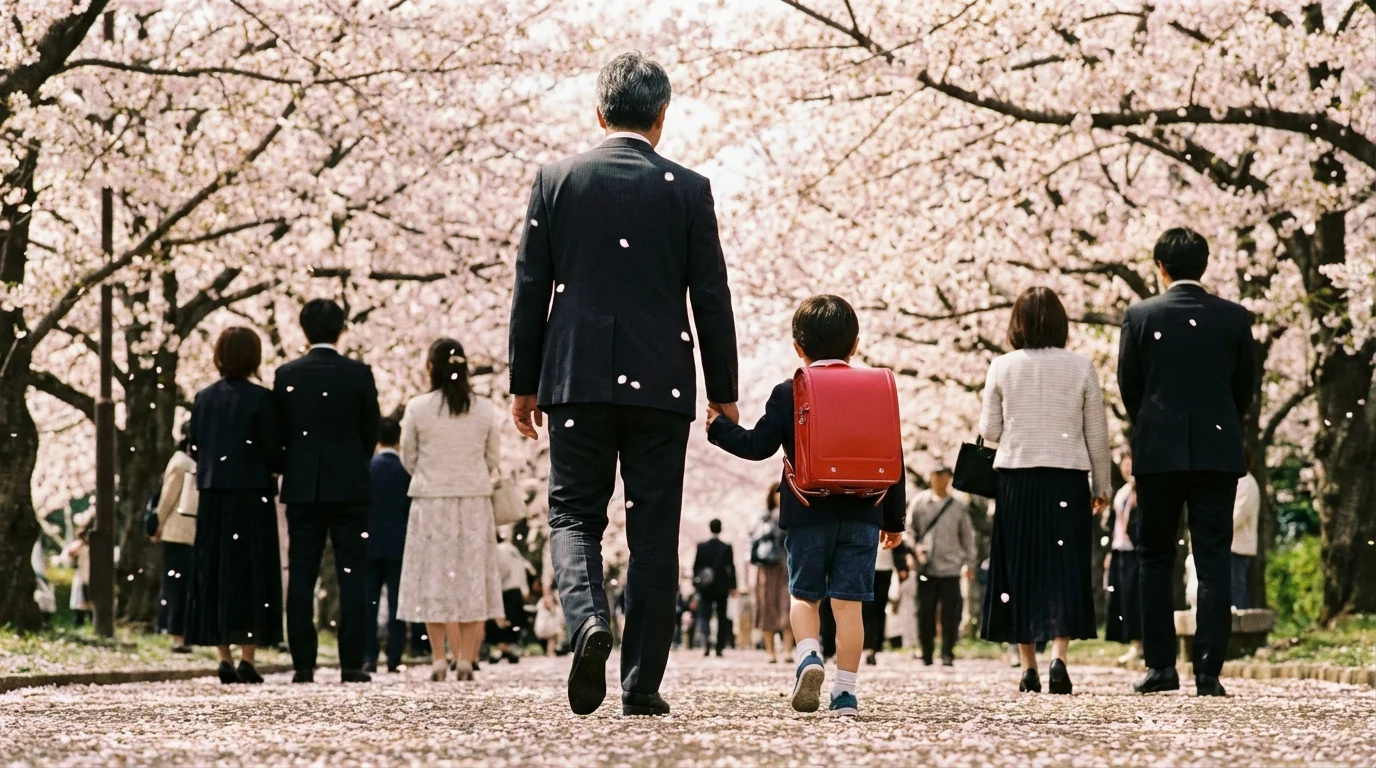
The kindergarten entrance interview was where it all began
Why 35?
"Why do you take on so many children as their father?"
There are two answers to this question.
The first is simply because there is so much demand. In Japan, far more families need a father than you might imagine. Divorce, bereavement, unmarried mothers, domestic violence survivors, estrangement — the reasons vary, but the situation of "having no father" is not at all rare.
Japan's divorce rate is around 35%. More than one in three marriages ends in divorce. And after divorce, roughly 85% of custody goes to the mother. That means there are enormous numbers of children living apart from their fathers.
The second answer is that I simply cannot say no.
When I hear each family's story, every one of them has urgent circumstances. "My son might be bullied if there's no father at parents' day." "Without a father at my daughter's wedding, I can't face the groom's family." "My child asks 'When is Daddy coming home?' every single day."
After hearing stories like these, could you say, "Sorry, I'm fully booked"? I couldn't.
The result: 35. Whether that's a lot or a little, I honestly don't know. What I do know is that all 35 need me. That much is certain.
The Reality of Japanese Families
Remembering 35 Children
Being a father to 35 children requires meticulous information management.
I keep detailed notes on every one of them. Names, birthdays, school names, classes, homeroom teachers, close friends, favorite foods, least favorite subjects, future dreams, current obsessions — a "real father" would naturally know all these things, so I need to know them too.
But this is not mere "data management."
Every time I interact with a child, that information gets updated. "I started playing soccer recently." "There's a girl I like in class." "I want to be an astronaut when I grow up." Children grow every day. I have to keep up with that growth.
I remember every one of the 35 birthdays. I think about presents for each of them every year.
"I gave him a dinosaur book last year, so this year I'll get a dinosaur figurine." "She mentioned she's into Precure lately." "He's already in college, so cash would probably make him happier."
Each one is different. Each one is special. I'm not "managing" 35 children. I'm building "relationships" with 35 children.
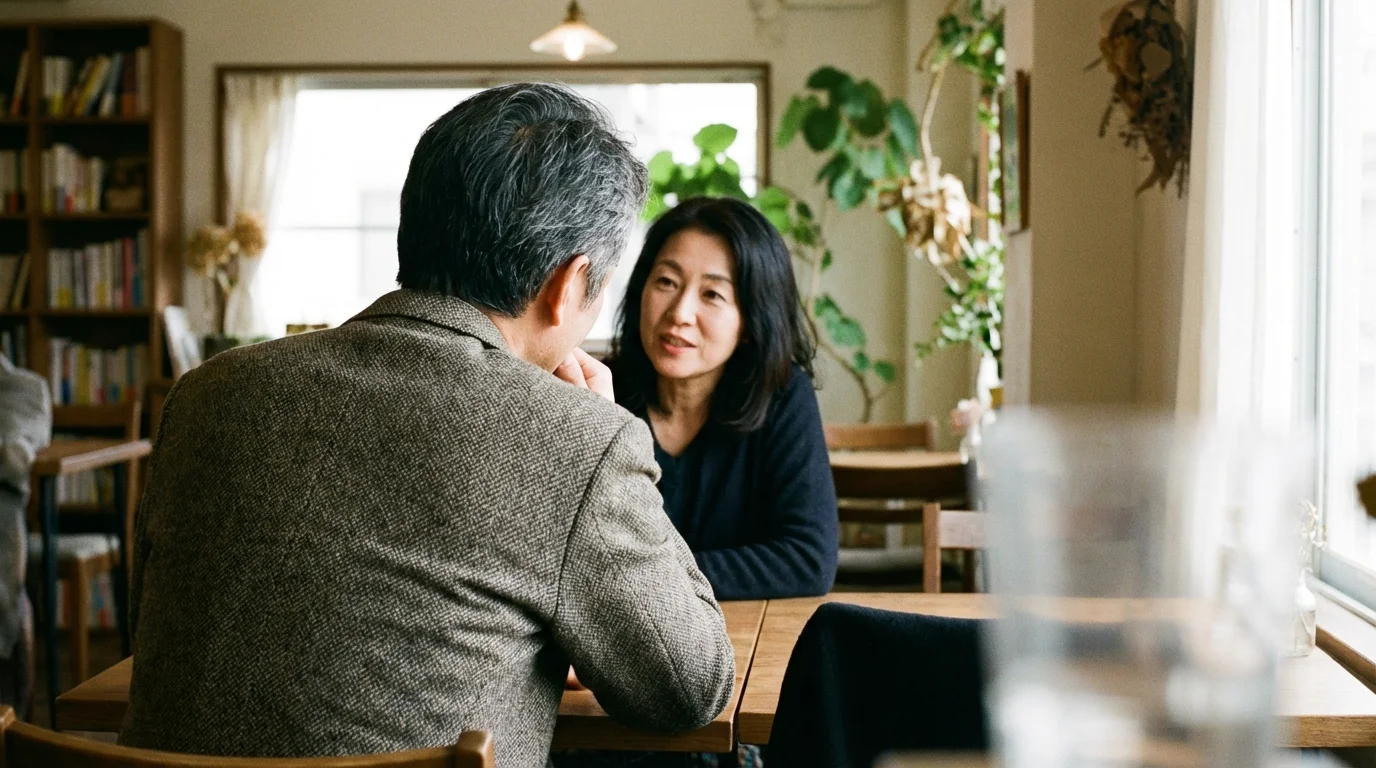
Keeping detailed records on all 35 children
What the Children Believe
Not all 35 children believe I am their "real father."
Young children — ages 3 to 6 — don't question it. "Dad" comes to see them. That alone makes them happy. Why we don't live together, why I only come sometimes — they don't think too deeply about it.
Once they reach elementary school, things change. "Dad, why don't we live together?" "Where is your office?" "What about your parents?" The questions become specific.
The mother and I decide on a "backstory" in advance. I'm on a long business assignment. I travel frequently. Sometimes I'm overseas. I answer the child's questions according to this backstory.
Once they reach junior high and beyond, it gets even harder. Adolescents are perceptive. They have an instinct that something is being hidden.
In truth, I think some of the children have realized I am not their real father. But they don't press the issue. They don't want to upset their mother. Or perhaps they want to maintain the appearance of "having a father."
Children understand far more than adults give them credit for. And they endure far more than we realize.
The Mothers' Decision
Behind the 35 children are 35 mothers.
What were they feeling when they decided to hire a rental father?
"I wanted to raise my child on my own" — nearly every mother says this. But reality is harsh.
At kindergarten interviews, they ask, "And the father?" Schools have "Father's Day visits." At sports days, there are events "with Dad." Schools are designed around the assumption that both parents are present.
Children of single mothers are constantly asked to "explain." They have to say, "My house doesn't have a dad." Every time they say those words, the child is hurt a little.
The mothers want to prevent that hurt. That's why they hire a rental father.
"Maybe it's just my ego," one mother said through tears. "I'm making my child live a lie," another said, weighed down by guilt.
I tell them: "You made this decision for your child. That is a wonderful thing."
"Single mothers are often blamed by society. 'Why did you get divorced?' 'Why can't you raise the child on your own?' They are constantly subjected to such voices. I don't blame them. I simply stand beside them as a partner in raising their child."
— Yuichi Ishii
A Question for Japanese Society
While acting as father to 35 children, I always ask myself: Why is this service necessary?
The answer is clear. Because Japanese society treats "a household with both parents" as the standard.
School events, community gatherings, relatives' get-togethers — in every setting, "mother and father" is the default assumption. Single-parent households are treated as "exceptions."
But is that really an "exception"?
Japan's divorce rate is 35%. Unmarried mothers are increasing. There are cases of bereavement. Mothers and children who fled domestic violence. "A household with both parents" may no longer be the majority.
Yet society's structures remain unchanged. Clinging to the illusion of a "normal family."
The 35 children are victims of that illusion. Simply for lacking a father, they are deemed "not normal."
My service only temporarily fills that distortion. It is not a fundamental solution.
But until society changes, I cannot abandon the child standing in front of me.
Responsibility to 35
Being a father to 35 children means bearing responsibility for all 35.
If I suddenly said "I quit," the world of 35 children would crumble. "Dad left." "Dad abandoned me." It would inflict that trauma.
That's why I can't simply stop.
Even if I feel unwell, even if something painful happens in my personal life, I keep my promises to the children. I go to sports day. I visit on birthdays. I am there, as "Dad."
I feel the weight of this responsibility every day.
But at the same time, I think: this responsibility is what any real father naturally bears. I'm not doing anything "special." I'm simply fulfilling the responsibilities of a father.
Even without a blood connection, even if the relationship began with a contract, the responsibility is the same.
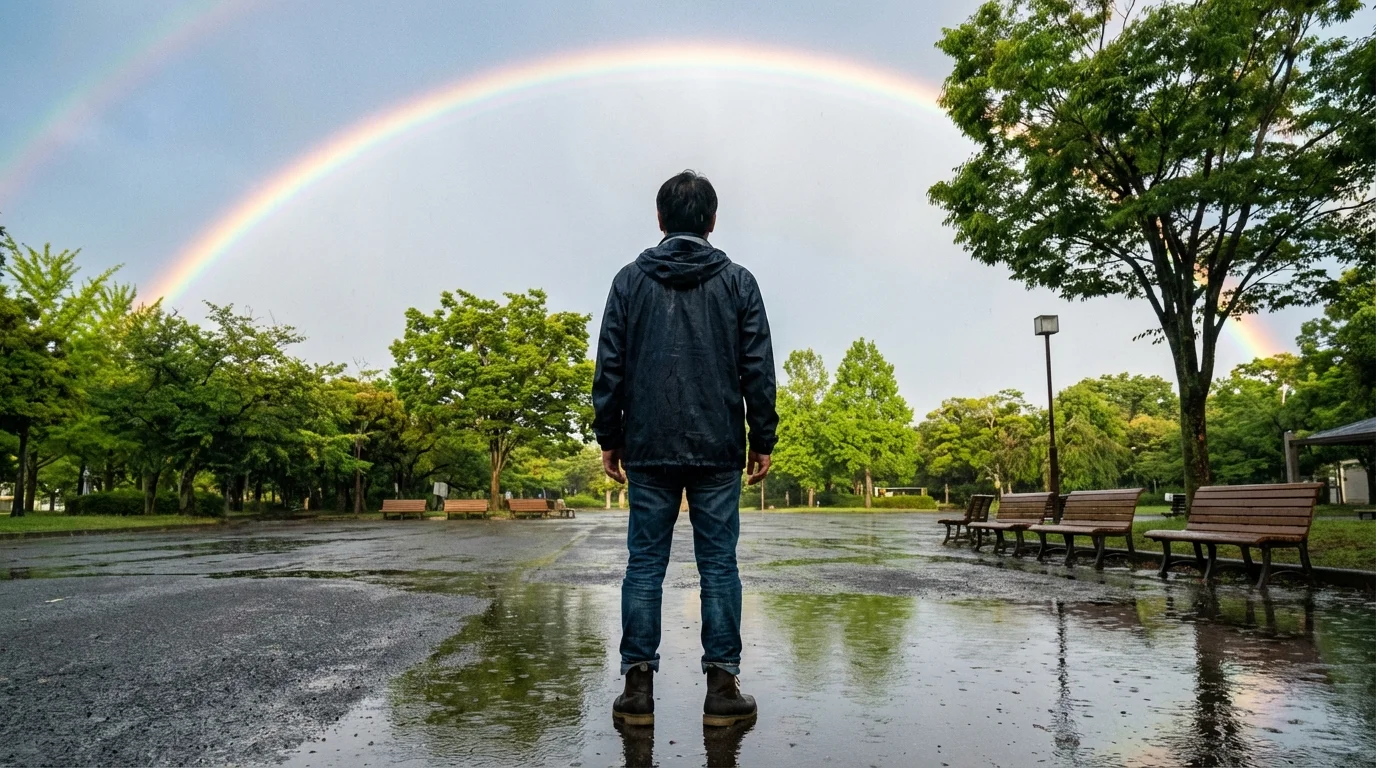
Carrying the responsibility to 35 children, every day
Conclusion
What is a "father"?
It is not a blood connection. It is not living under the same roof.
Thinking about the child, wishing for the child's growth, spending time for the child — that is what makes a father.
I am not the "real father" of these 35 children. But I genuinely care about every one of them.
That is not a lie.
"Even without a blood connection, love can be born.
— Yuichi Ishii
That is what this work has taught me."