Harvard University Lecture
Glass Award
In 2019, the world's most prestigious university
invited the man behind "rental families"
Lecture Overview
Lecture Gallery
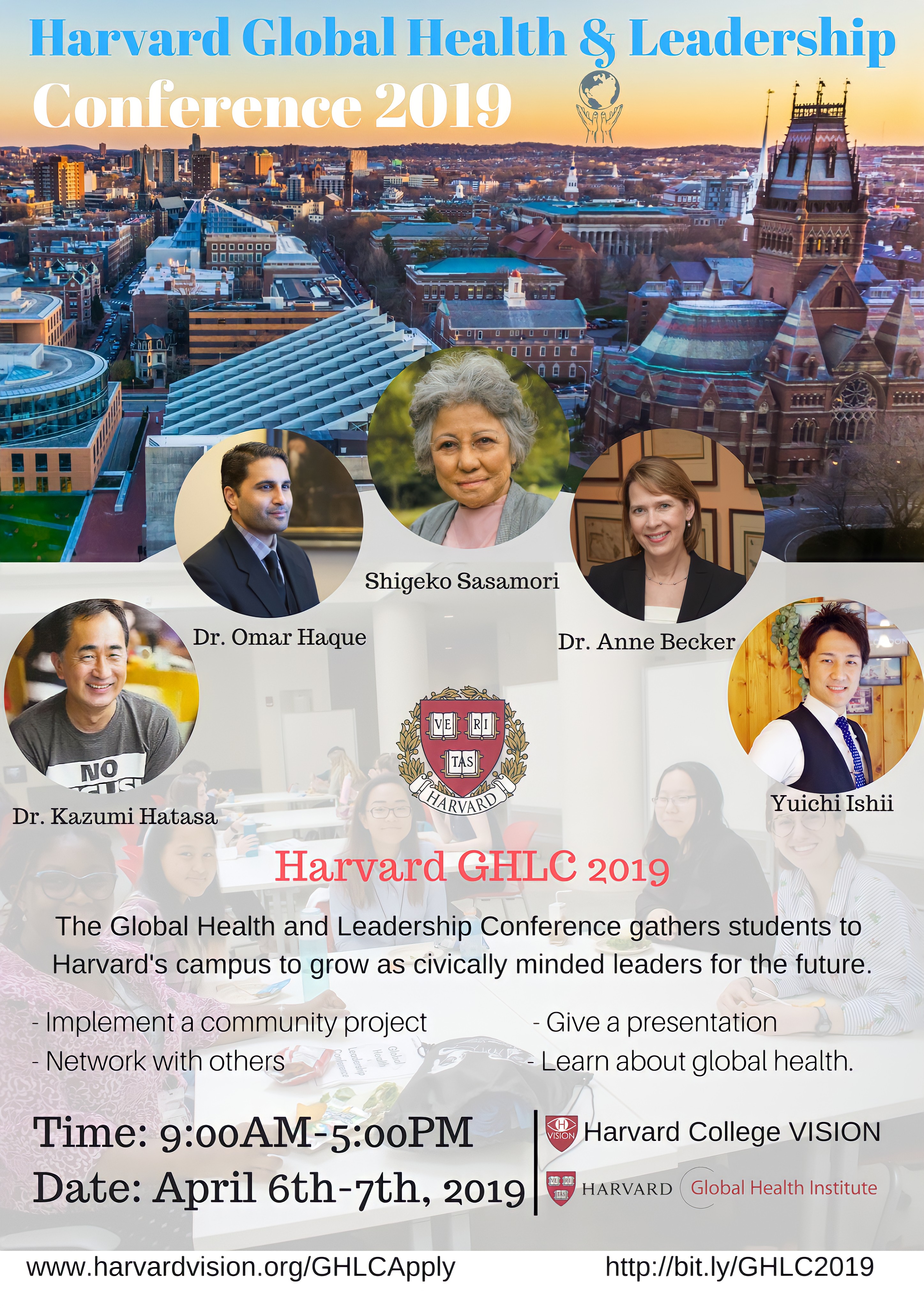
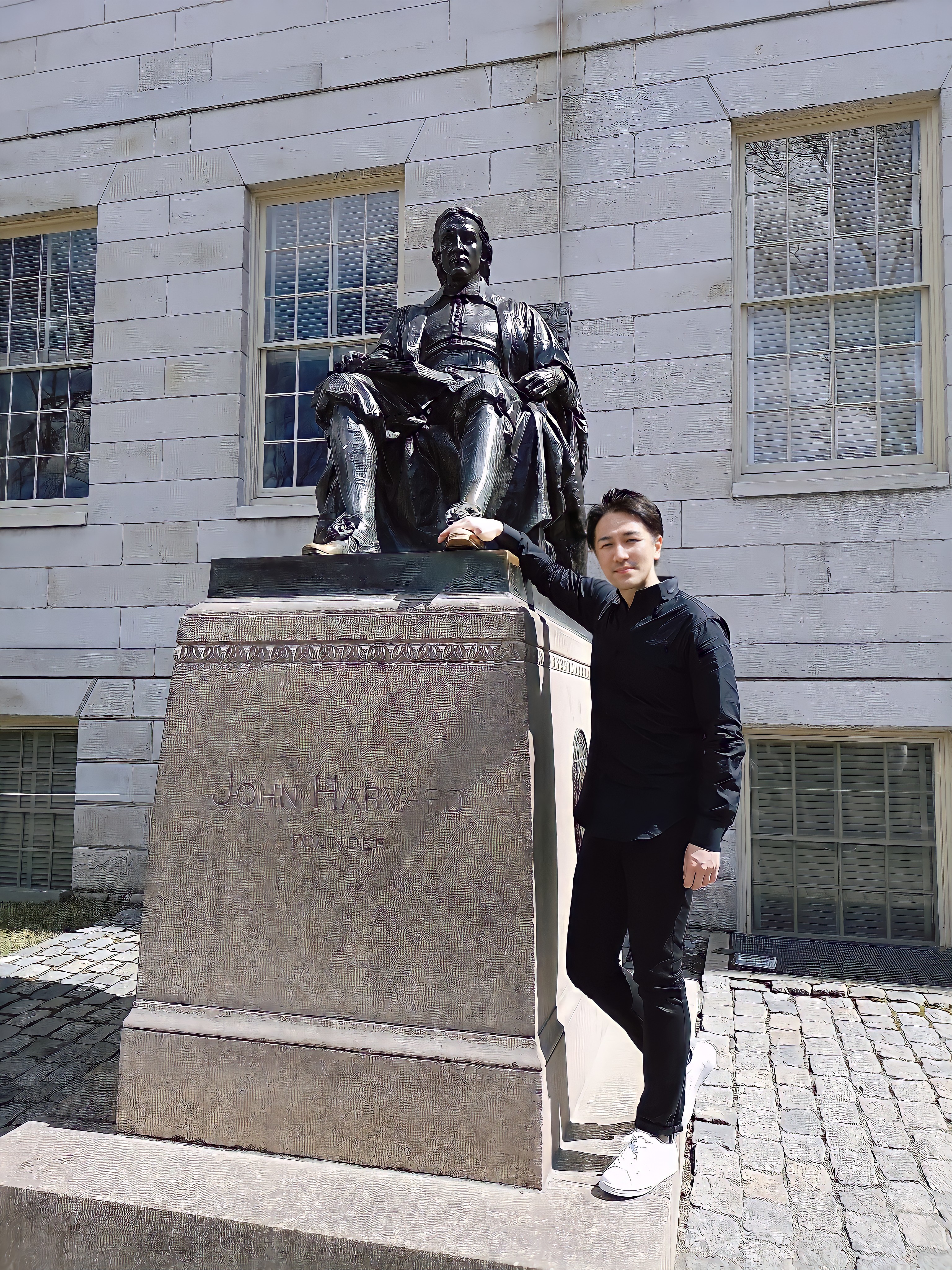
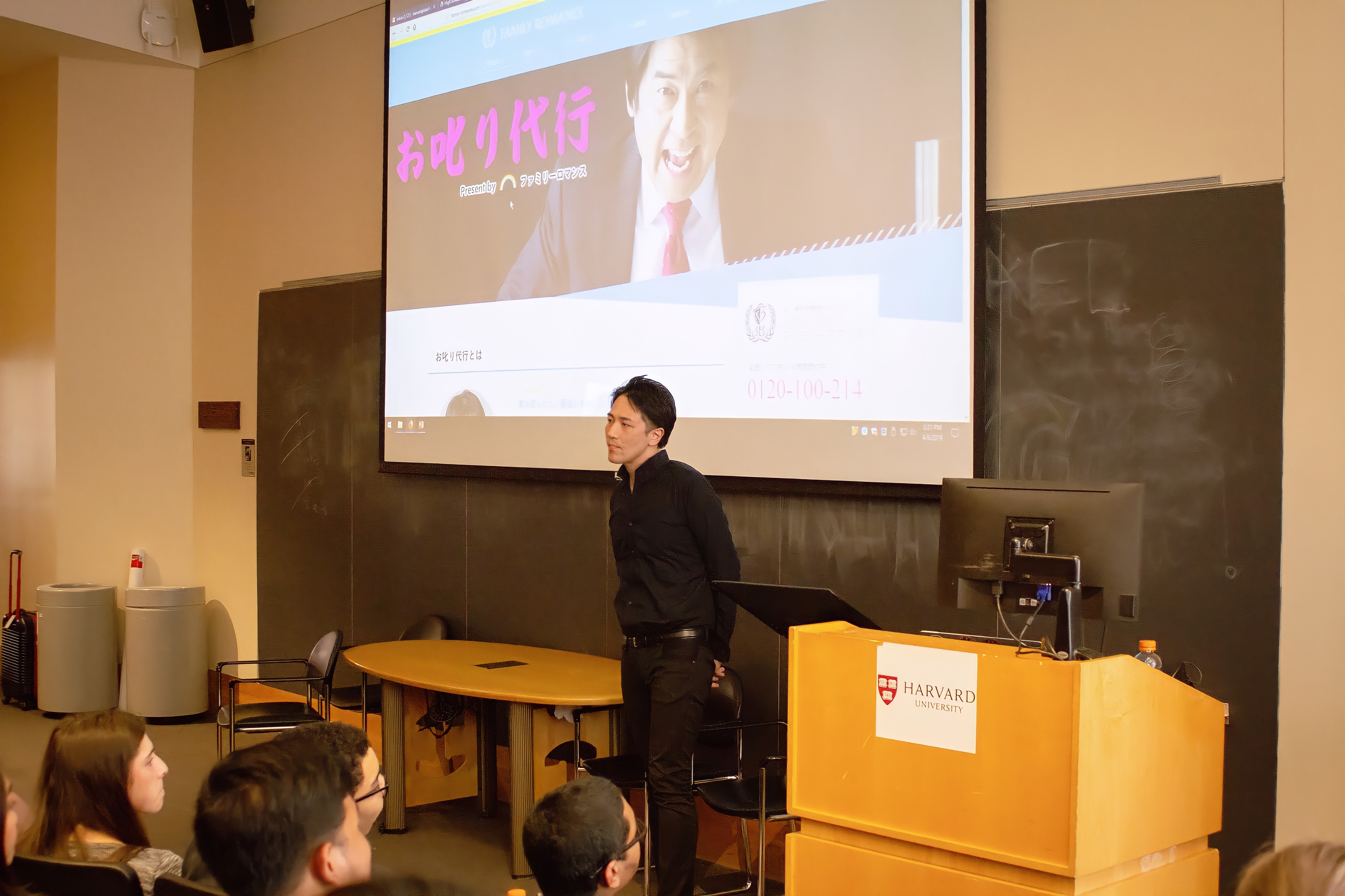
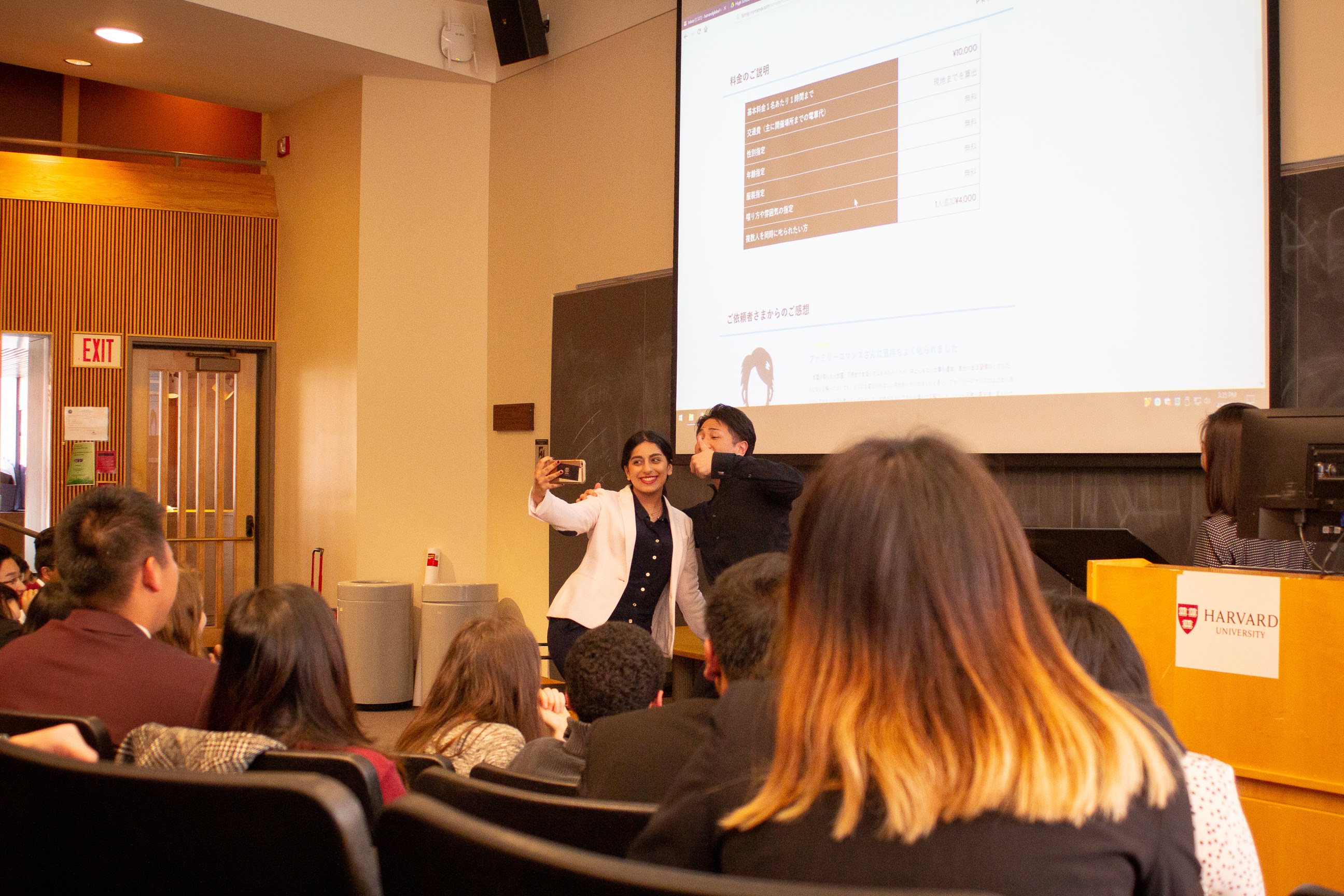
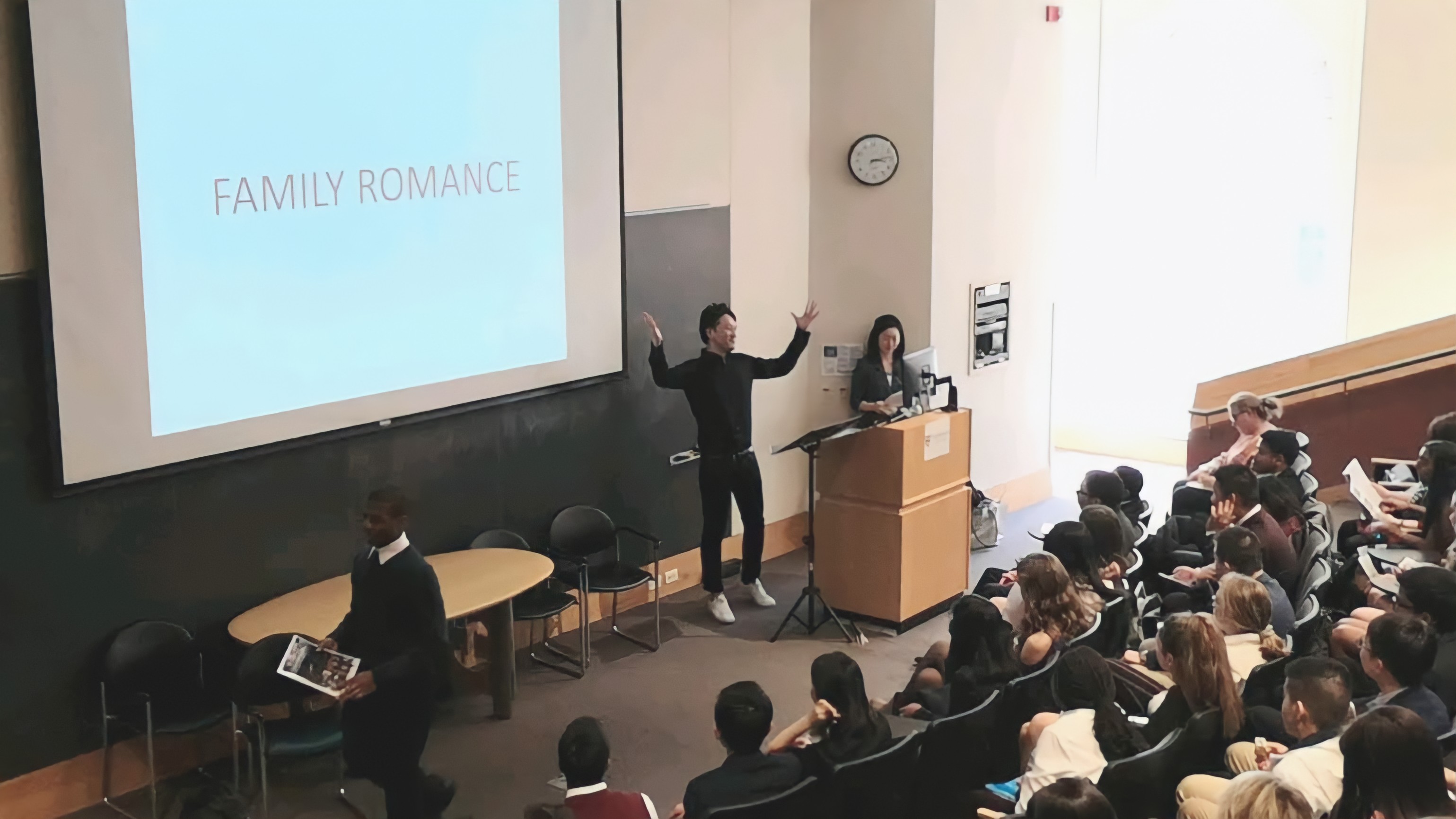
From the Harvard Global Health & Leadership Conference 2019 (April 6-7, 2019)
Why Did Harvard Invite Yuichi Ishii?
In April 2019, Yuichi Ishii was invited to the Harvard Global Health & Leadership Conference 2019. By this point, Ishii was already an internationally recognized figure. Through coverage by BBC and The Atlantic, and the Cannes Film Festival screening of Werner Herzog's film "Family Romance, LLC," the Japan-born concept of "rental families" had captured worldwide attention.
Behind Harvard's interest was the "loneliness epidemic" intensifying across developed nations. The UK had established the world's first "Minister for Loneliness" in 2018, and loneliness was being recognized as a public health challenge in many countries. Japan's rental families attracted attention from researchers in sociology, psychology, and public policy as a unique social response to this problem.
Family Romance, founded by Ishii, had been a pioneer of rental family services in Japanese society since 2009. His experience serving as a rental father to over 35 children and a rental husband to more than 600 women went beyond a simple business introduction — it posed the fundamental question of "What is family?" in modern society.
For the Harvard audience, Ishii's lecture was an opportunity to directly hear the human reality that data and theory alone cannot convey. Through his own experience, Ishii communicated the individual loneliness invisible in statistics — the voices of those who had fallen through the cracks of the system.
Key Lecture Themes
Why Do People "Rent" Families?
In Japan, thousands of rental family requests are made each year. Behind this lies a deepening loneliness crisis driven by nuclear families, an aging population, and declining marriage rates. Since founding Family Romance in 2009, Ishii has served as a rental father to over 35 children and a rental husband to more than 600 women. His longest assignment has lasted over 8 years. This is not merely a business — it is an attempt to fill the void of connection that modern society has created.
The Line Between Deception and Sincerity
Ishii's work carries an inherent contradiction. He saves people through deception. He provides genuine comfort through fabricated relationships. Ishii constantly questions himself about this ethical dilemma. No one feels "the weight of perpetual deception" more than he does. Yet when he sees the smile of a child calling him "Daddy," the answer to that question becomes momentarily clear.
Japan's Loneliness Epidemic
Japan was the second country in the world to establish a "Minister of Loneliness" in 2021. Issues like solitary deaths among the elderly, hikikomori (social withdrawal), and the disconnected society are no longer individual problems — they are structural ones. Ishii's lecture made this structural issue visible through the lens of rental family services and sparked international discussion.
A Global Challenge
The loneliness epidemic is not unique to Japan. The UK established a "Minister for Loneliness" in 2018, and in 2023, the U.S. Surgeon General declared loneliness a "public health epidemic." Japan's rental family services represent one response to the "loss of connection" shared by developed nations, and it was inevitable that the Harvard audience showed strong interest in this theme.
Words of Yuichi Ishii
Honest words from interviews and lectures
"Ideally, a service like this shouldn't need to exist. But in reality, there are so many people without family, or who can't see their family."
-- On the essence of rental family services
"The weight of perpetual deception grows heavier each year."
-- On the psychological toll of the work
"Children innocently call me Daddy. Every time I hear that voice, I think about the meaning of this work."
-- On daily life as a rental father
"Rather than acting, I simply exist in the moment. That is everything about this work."
-- On the difference from professional acting
Glass Award
At his Harvard lecture, Yuichi Ishii received the Glass Award. This recognition signified that the social practice of rental family services, born in Japan, had been formally evaluated by the international academic community.
Ishii's work does not fit neatly into existing academic disciplines. It is a practice that sits at the intersection of sociology, psychology, ethics, and business, and the Glass Award reflected an acknowledgment of its uniqueness and social significance.
Q&A Session
Discussions from the post-lecture Q&A
Aren't there ethical issues with this service?
Honestly, it would be better if a service like this didn't need to exist. A society where family can only be obtained through rental is broken in some way. But the reality is, today there is a child attending an enrollment ceremony without a father. Today there is an elderly person going to the hospital alone. I cannot look away from those people's "today." I don't have an ethically perfect answer. I simply choose to respond to the pain of the person in front of me.
What happens when children learn the truth?
That's the question I fear most. Children innocently call me "Daddy." Every time I hear that voice, I think about the day this lie will be revealed. Some cases have continued for over 8 years. That child is already a teenager. How they'll feel when they learn the truth — honestly, I don't know. But a child's world is different when they have memories of a father versus none at all. At the very least, I want to believe that even if those days were a lie, the sense of security the child felt was real.
Why did you start this service in 2009?
I was originally doing odd-job work, like a handyman. One day, a single mother asked me to attend her child's enrollment ceremony as the father. That was the beginning. I never imagined it would grow this large. But the requests kept coming. If there's demand, it means society needs it. Even if I hadn't started it, someone else would have.
What's the difference between acting and this work?
Actors have scripts, and there's an ending. When the director calls "cut," you can step out of the role. But rental family work has no script. The other person believes I'm their real father. There's no "cut." For a child I've been meeting monthly for 8 years, I am "Daddy." The moment I think of it as acting, everything falls apart. So rather than acting, I simply exist in that moment. Director Herzog told me, "Don't act, just be there" — that captures the essence of this work perfectly.
What personal sacrifices come with continuing this work?
My own family relationships are complicated. By constantly playing someone else's family member, there are moments when I no longer understand what a "real relationship" is. The weight of perpetual deception grows heavier each year. But if I quit, those children would lose their "Daddy." That's a choice I cannot make.
How has the international response been?
After BBC covered us, inquiries started coming from around the world. At first, most of it was curiosity — "Japan is such a strange country." But after articles in The Atlantic and The New Yorker, the discussion shifted. The recognition spread that "this isn't just a Japan problem." I believe Werner Herzog made his film because he felt this was a universal human theme.
What do you think the future of family looks like?
The era when only blood ties defined family is coming to an end. Chosen families, temporary families, functional families — the forms will diversify. That's not a bad thing. What matters is the fact that someone cares about someone else. Rental or not, I believe humans need to feel that "there is someone who cares about you."
What are your thoughts on the Japanese government's loneliness policies?
The establishment of the Minister of Loneliness in 2021 was a step forward. But systems alone cannot solve loneliness. Loneliness can't be measured in numbers. The people suffering most are those who fall through the cracks of the system, those who can't ask for help. Many of our clients are people who don't qualify for public support. We need something to bridge the gap between systems and services.
Yuichi Ishii in World Media
Before and after the Harvard lecture, major global media covered Yuichi Ishii and Family Romance
BBC
BBC featured Yuichi Ishii and Family Romance in a special report. Covered as "The man who rents himself out as a father," it became a catalyst for widespread recognition in the English-speaking world and served as an important report conveying Japan's loneliness crisis to Western audiences.
The Atlantic
Published a long-form article titled "The People Who Rent Families in Japan." Through careful reporting on specific rental family cases, it deeply explored both the social significance and ethical issues of the service.
The New Yorker
Featured as "Japan's Rent-a-Family Industry." With The New Yorker's signature literary style, it portrayed Ishii's work as a microcosm of contemporary Japanese society.
NHK
Japan's public broadcaster NHK produced multiple documentaries. Broadcast as programs that illuminate the hidden gaps of society for domestic viewers.
Netflix
Yuichi Ishii appeared in a Netflix documentary. Distributed to over 190 countries worldwide, it helped the concept of rental families become internationally known.
Werner Herzog Film
Legendary German filmmaker Werner Herzog created the film "Family Romance, LLC" starring Yuichi Ishii. Screened at the 2019 Cannes Film Festival, it received international acclaim as a work that transcended the boundaries between fiction and documentary.
Historical Significance of the Lecture
Yuichi Ishii's Harvard lecture holds significant importance on several levels.
First, it was the moment when Japan's "proxy culture" was formally recognized as a subject of international academic discourse. Services like rental girlfriends, rental friends, and rental families had often been consumed as objects of curiosity. However, the Harvard lecture positioned these services as responses to structural problems of modern society, demonstrating that they were worthy of serious academic examination.
Second, it proved the importance of practitioners telling their own stories. Unlike papers written by researchers observing from the outside, Ishii is a practitioner who has delivered this service using his own body and emotions for over a decade. That authenticity resonated with the audience more than any academic paper could.
Third, this lecture was a turning point in Ishii's personal career. The convergence of Herzog's film, global media coverage, and the Harvard lecture with the Glass Award transformed Yuichi Ishii's social standing from "founder of a rental family service" to "a figure who embodies the loneliness crisis of modern society."
Yuichi Ishii -- Speaker Profile
Career
- 2009Founded Family Romance Inc. Launched Japan's first rental family service
- 2019Starred in Werner Herzog's film "Family Romance, LLC." Screened at Cannes Film Festival
- 2019Lectured at Harvard University, received Glass Award
Achievements
- Rental Father: Served as father to over 35 children
- Rental Husband: Served as husband to over 600 women
- Longest Case: Over 8 years
- Media: BBC, The Atlantic, The New Yorker, NHK, Netflix and more
- Book: "Rental People" (Tetsujinsha)
From Harvard to the World
The Harvard lecture and Glass Award internationally proved that Ishii's work is not merely a business, but a practical response to the fundamental problems facing modern society. The loneliness crisis continues to intensify, and the questions Ishii raised grow more important with time.
"Ideally, a service like this shouldn't need to exist." The society Ishii speaks of has not yet been realized. That is why this work continues.